Buy ads24.eu ?
We are moving the project
ads24.eu .
Are you interested in purchasing the domain
ads24.eu ?
domain@kv-gmbh.de · 0541-91531010
Buy ads24.eu ?
Was Stalin popular?
Stalin was popular among some segments of the Soviet population, particularly among the working class and the rural peasantry. His leadership during World War II and the industrialization of the Soviet Union contributed to his popularity among these groups. However, his policies also led to widespread repression, purges, and famine, which resulted in significant opposition and fear among many Soviet citizens. Overall, Stalin's popularity was mixed, with some supporting him for his achievements and others fearing his authoritarian rule. **
'Josef Stalin Kinder' translates to 'Joseph Stalin Children' in English.
The phrase "Josef Stalin Kinder" translates to "Joseph Stalin Children" in English. This phrase refers to the system of orphanages and children's homes established in the Soviet Union during Stalin's rule. These institutions were named after Stalin and were used to indoctrinate children with communist ideology and loyalty to the state. The use of Stalin's name in the title of these institutions reflects the cult of personality that surrounded him during his rule. **

Similar search terms for Stalin
Top-Angebote
Products related to Stalin:
-
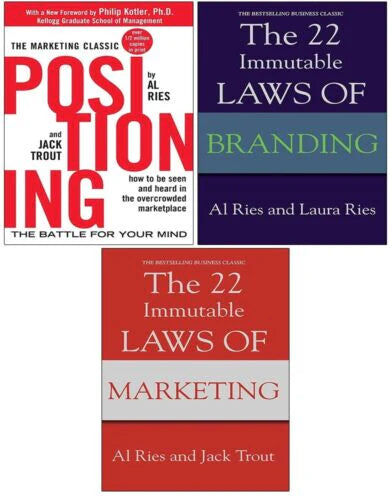
Various Publishers 22 Immutable Laws Branding, Marketing & Positioning 3 Book Set by Al Ries, Jack Trout & Laura Ries - Paperback Business Strategy ClassicsThis three-book paperback set brings together three influential marketing texts written by Al Ries alongside collaborators Jack Trout and Laura Ries. The collection distils decades of branding and marketing strategy into short, memorable 'laws' and case studies. The set includes The 22 Immutable Laws of Branding, The 22 Immutable Laws of Marketing, and Positioning: The Battle for Your Mind. Ideal for business students, entrepreneurs, marketers, and anyone building a brand, it's a practical, portable reference library that has shaped how the modern business world thinks about positioning, branding, and market leadership.28,99 £*Shipping: 2,99 £Secure redirect to the provider
-
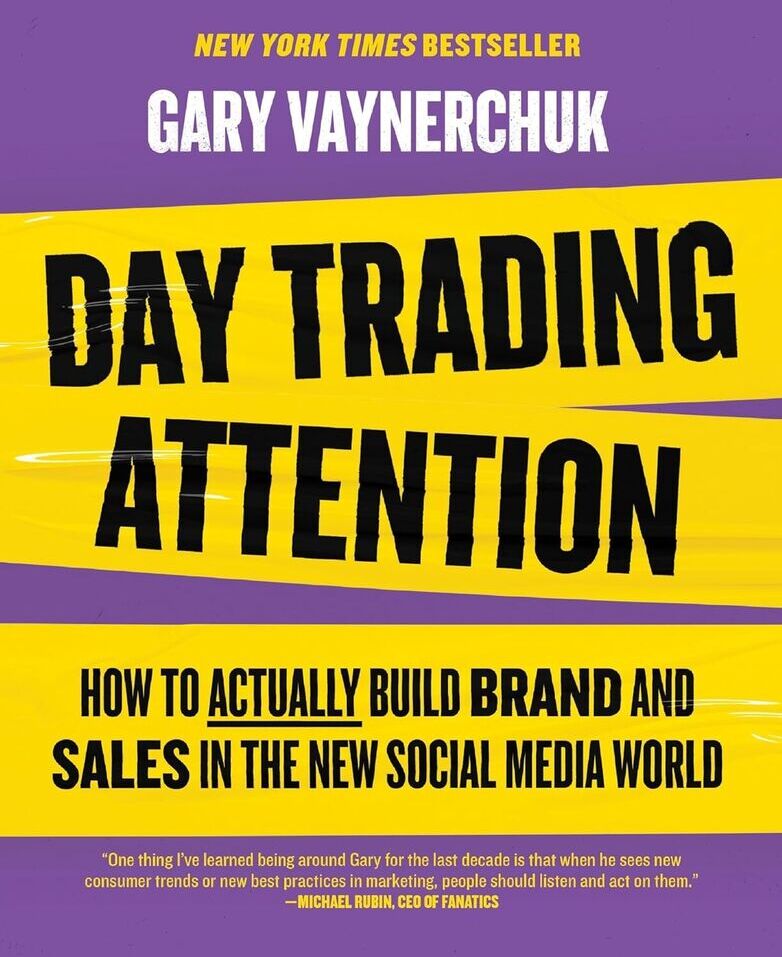
Harper Business Day Trading Attention & Jab Jab Jab Right Hook by Gary Vaynerchuk - Hardcover 2 Book Marketing Set - Business Strategy & Social Media AdvertisingThis two-book bundle brings together Gary Vaynerchuk's most influential marketing titles in one brand-new hardcover set. Day Trading Attention (2024) updates the playbook for today's social platforms, while Jab, Jab, Jab, Right Hook (2013) remains the foundational storytelling guide that built GaryVee's reputation. Together they offer a before-and-after view of how attention, content, and advertising have evolved — essential reading for marketers, founders, and content creators. The books are published by Harper Business and are suitable for adult readers interested in business and marketing.3,89 £*Shipping: 2,99 £Secure redirect to the provider
-
Infinity: Shadow Affairs Campaign - Modiphius Entertainment Printed Campaign BookJoin the war for Paradiso in the Infinity roleplaying game with the Shadow Affairs Campaign. Designed for both new and experienced players, it offers a substantial and balanced experience with detailed maps, structured scenarios, optional side missions, NPCs, equipment, adversaries, and conversion rules for N3 units.17,64 £*Shipping: 3,95 £Secure redirect to the provider


-
Is Stalin a communist?
Stalin was a prominent figure in the Soviet Union and the leader of the Communist Party. He implemented policies that were based on communist ideology, such as collectivization of agriculture and industrialization. However, there is debate among scholars and historians about whether Stalin truly adhered to the principles of communism, as his regime was characterized by authoritarianism, repression, and a cult of personality. Some argue that Stalin's actions deviated from true communist ideals, while others view him as a communist leader who used extreme measures to consolidate power. **
-
Was Stalin a communist?
Yes, Stalin was a communist. He was a key figure in the establishment of the Soviet Union and the leader of the Communist Party of the Soviet Union. Stalin implemented policies that aimed to create a socialist society based on Marxist-Leninist principles, including collectivization of agriculture and industrialization. Despite his authoritarian rule and deviation from some communist ideals, Stalin identified as a communist and sought to advance the goals of the communist movement. **
-
Who did Stalin kill?
Stalin is responsible for the deaths of millions of people during his rule in the Soviet Union. He targeted political opponents, intellectuals, and anyone perceived as a threat to his power. His policies, including forced collectivization and the Great Purge, led to the deaths of millions through executions, forced labor camps, and famine. Additionally, Stalin's policies and actions caused the deaths of countless others through indirect means such as neglect, starvation, and harsh living conditions. **
-
Did Stalin develop fascism?
No, Stalin did not develop fascism. Fascism is a far-right, authoritarian ultranationalism characterized by dictatorial power, forcible suppression of opposition, and strong regimentation of society and the economy. Stalin, on the other hand, was the leader of the Soviet Union and a proponent of communism, which is a far-left ideology that advocates for the collective ownership of the means of production and the elimination of class distinctions. While both ideologies are authoritarian in nature, they are fundamentally different in their principles and goals. **


Do Russians like Stalin?
Opinions on Stalin in Russia are divided. Some Russians view Stalin as a strong leader who modernized the country and led the Soviet Union to victory in World War II. Others, however, see him as a brutal dictator responsible for the deaths of millions of people during his reign. Overall, attitudes towards Stalin in Russia are complex and vary depending on individual perspectives and experiences. **
How did Stalin react?
Stalin reacted to the German invasion of the Soviet Union with shock and disbelief. He initially struggled to comprehend the scale of the attack and was slow to respond, leading to significant initial losses for the Soviet forces. However, once he grasped the gravity of the situation, Stalin took decisive action to rally the Soviet people and mobilize the military for a prolonged and brutal struggle against the German forces. He also sought support from the Allies, particularly the United States and Britain, to aid in the fight against Nazi Germany. **
Top-Angebote
Products related to Stalin:
-
Hitler, Stalin, Mum and Dad by Daniel Finkelstein - Sunday Times Bestselling WWII Family Memoir - New Paperback, 496 Pages, William CollinsHitler, Stalin, Mum and Dad is a memoir by Daniel Finkelstein, tracing his parents' extraordinary survival through the two great totalitarian horrors of the twentieth century. Combining rigorous historical research with deeply personal family recollection, Finkelstein reconstructs how his mother endured Hitler's death camps and his father survived Stalin's slave labour camps. Written with clarity and restraint, it is a moving testament to endurance, love, and the fragile threads of chance that decide who lives and who does not. Daniel Finkelstein, a well-known British political columnist and broadcaster, spent years piecing together the fragmented histories of his mother Mirjam Wiener and his father Ludwik Finkelstein. Mirjam's family, prominent and cultured in pre-war Germany, was swept into the machinery of Nazi persecution, ultimately surviving Bergen-Belsen.3,99 £*Shipping: 2,99 £Secure redirect to the provider
-
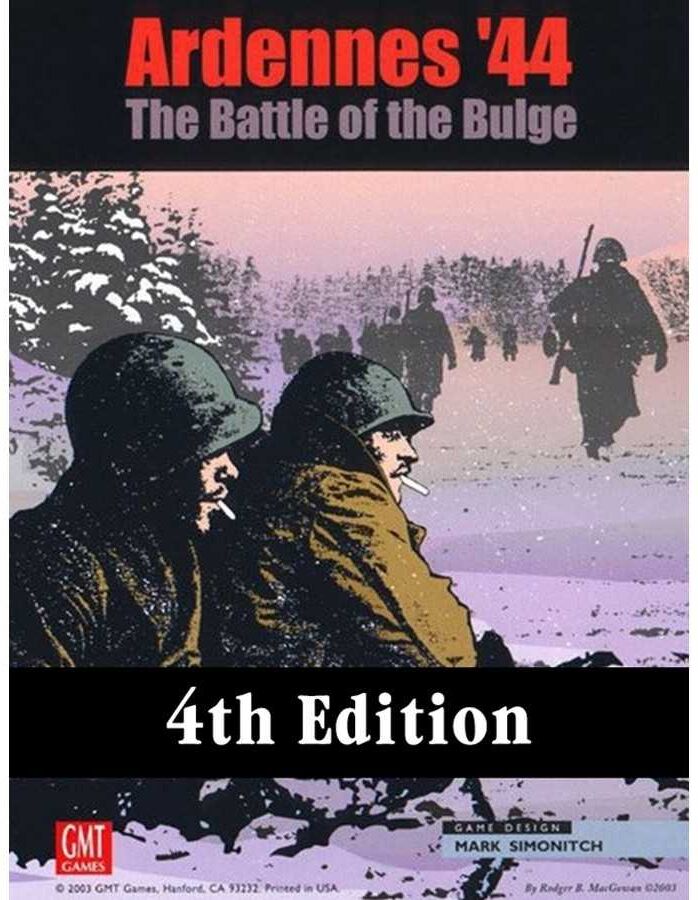
Gmt Games Ardennes '44 - Historical Wargame - Campaign Play - Operational-Level StrategyRelive the opening stages of the Battle of the Bulge in this historical wargame from GMT Games. The game covers the German offensive from 16 to 26 December 1944, as German forces attempt to break through the Ardennes, cross the Meuse, and advance towards Antwerp. Players must contend with historical objectives, changing lines of attack, and the determined Allied defense around locations including Bastogne and St Vith. The fourth edition includes a detailed order of battle, a full campaign scenario, and two shorter scenarios focusing on the initial German attack. Designed by Mark Simonitch, intended for players interested in operational-level Second World War strategy.47,95 £*Shipping: 3,95 £Secure redirect to the provider
-
Various Publishers 22 Immutable Laws Branding, Marketing & Positioning 3 Book Set by Al Ries, Jack Trout & Laura Ries - Paperback Business Strategy ClassicsThis three-book paperback set brings together three influential marketing texts written by Al Ries alongside collaborators Jack Trout and Laura Ries. The collection distils decades of branding and marketing strategy into short, memorable 'laws' and case studies. The set includes The 22 Immutable Laws of Branding, The 22 Immutable Laws of Marketing, and Positioning: The Battle for Your Mind. Ideal for business students, entrepreneurs, marketers, and anyone building a brand, it's a practical, portable reference library that has shaped how the modern business world thinks about positioning, branding, and market leadership.28,99 £*Shipping: 2,99 £Secure redirect to the provider
-
Harper Business Day Trading Attention & Jab Jab Jab Right Hook by Gary Vaynerchuk - Hardcover 2 Book Marketing Set - Business Strategy & Social Media AdvertisingThis two-book bundle brings together Gary Vaynerchuk's most influential marketing titles in one brand-new hardcover set. Day Trading Attention (2024) updates the playbook for today's social platforms, while Jab, Jab, Jab, Right Hook (2013) remains the foundational storytelling guide that built GaryVee's reputation. Together they offer a before-and-after view of how attention, content, and advertising have evolved — essential reading for marketers, founders, and content creators. The books are published by Harper Business and are suitable for adult readers interested in business and marketing.3,89 £*Shipping: 2,99 £Secure redirect to the provider
-
Was Stalin popular?
Stalin was popular among some segments of the Soviet population, particularly among the working class and the rural peasantry. His leadership during World War II and the industrialization of the Soviet Union contributed to his popularity among these groups. However, his policies also led to widespread repression, purges, and famine, which resulted in significant opposition and fear among many Soviet citizens. Overall, Stalin's popularity was mixed, with some supporting him for his achievements and others fearing his authoritarian rule. **
-
'Josef Stalin Kinder' translates to 'Joseph Stalin Children' in English.
The phrase "Josef Stalin Kinder" translates to "Joseph Stalin Children" in English. This phrase refers to the system of orphanages and children's homes established in the Soviet Union during Stalin's rule. These institutions were named after Stalin and were used to indoctrinate children with communist ideology and loyalty to the state. The use of Stalin's name in the title of these institutions reflects the cult of personality that surrounded him during his rule. **
-
Is Stalin a communist?
Stalin was a prominent figure in the Soviet Union and the leader of the Communist Party. He implemented policies that were based on communist ideology, such as collectivization of agriculture and industrialization. However, there is debate among scholars and historians about whether Stalin truly adhered to the principles of communism, as his regime was characterized by authoritarianism, repression, and a cult of personality. Some argue that Stalin's actions deviated from true communist ideals, while others view him as a communist leader who used extreme measures to consolidate power. **
-
Was Stalin a communist?
Yes, Stalin was a communist. He was a key figure in the establishment of the Soviet Union and the leader of the Communist Party of the Soviet Union. Stalin implemented policies that aimed to create a socialist society based on Marxist-Leninist principles, including collectivization of agriculture and industrialization. Despite his authoritarian rule and deviation from some communist ideals, Stalin identified as a communist and sought to advance the goals of the communist movement. **
Similar search terms for Stalin
-
Infinity: Shadow Affairs Campaign - Modiphius Entertainment Printed Campaign BookJoin the war for Paradiso in the Infinity roleplaying game with the Shadow Affairs Campaign. Designed for both new and experienced players, it offers a substantial and balanced experience with detailed maps, structured scenarios, optional side missions, NPCs, equipment, adversaries, and conversion rules for N3 units.17,64 £*Shipping: 3,95 £Secure redirect to the provider
-
VEGAZ ADS-052 Exhaust pressure sensorExhaust System: for vehicles with factory fitted soot -/particulate filter; Construction Year from: 07/2012, 08/2011, 06/2013, 05/2013; Construction Year to: 03/2015, 04/2015, 05/2015; Engine Code: 4N13, 4D56, SHY1, 4M41, EE20Z, 4N14, SHY4, 20Z; Vehicle Identification Number (VIN) from: 16112572,49 £*Shipping: 8,45 £Secure redirect to the provider
-
No Marketing Systems Wood Corner Desk"The corner desk measures 42"" X 28"" X 30"" And Weighs 42 lbs. Arrives with only minimal Assembly required. Comfortably fitting in any home, studio, apartment, and office, The small corner writing desk maximizes space in compact rooms."257,04 $*Shipping: 0,00 $Secure redirect to the provider
-
Who did Stalin kill?
Stalin is responsible for the deaths of millions of people during his rule in the Soviet Union. He targeted political opponents, intellectuals, and anyone perceived as a threat to his power. His policies, including forced collectivization and the Great Purge, led to the deaths of millions through executions, forced labor camps, and famine. Additionally, Stalin's policies and actions caused the deaths of countless others through indirect means such as neglect, starvation, and harsh living conditions. **
-
Did Stalin develop fascism?
No, Stalin did not develop fascism. Fascism is a far-right, authoritarian ultranationalism characterized by dictatorial power, forcible suppression of opposition, and strong regimentation of society and the economy. Stalin, on the other hand, was the leader of the Soviet Union and a proponent of communism, which is a far-left ideology that advocates for the collective ownership of the means of production and the elimination of class distinctions. While both ideologies are authoritarian in nature, they are fundamentally different in their principles and goals. **
-
Do Russians like Stalin?
Opinions on Stalin in Russia are divided. Some Russians view Stalin as a strong leader who modernized the country and led the Soviet Union to victory in World War II. Others, however, see him as a brutal dictator responsible for the deaths of millions of people during his reign. Overall, attitudes towards Stalin in Russia are complex and vary depending on individual perspectives and experiences. **
-
How did Stalin react?
Stalin reacted to the German invasion of the Soviet Union with shock and disbelief. He initially struggled to comprehend the scale of the attack and was slow to respond, leading to significant initial losses for the Soviet forces. However, once he grasped the gravity of the situation, Stalin took decisive action to rally the Soviet people and mobilize the military for a prolonged and brutal struggle against the German forces. He also sought support from the Allies, particularly the United States and Britain, to aid in the fight against Nazi Germany. **
* All prices are inclusive of VAT and, if applicable, plus shipping costs. The offer information is based on the details provided by the respective shop and is updated through automated processes. Real-time updates do not occur, so deviations can occur in individual cases. ** Note: Parts of this content were created by AI.